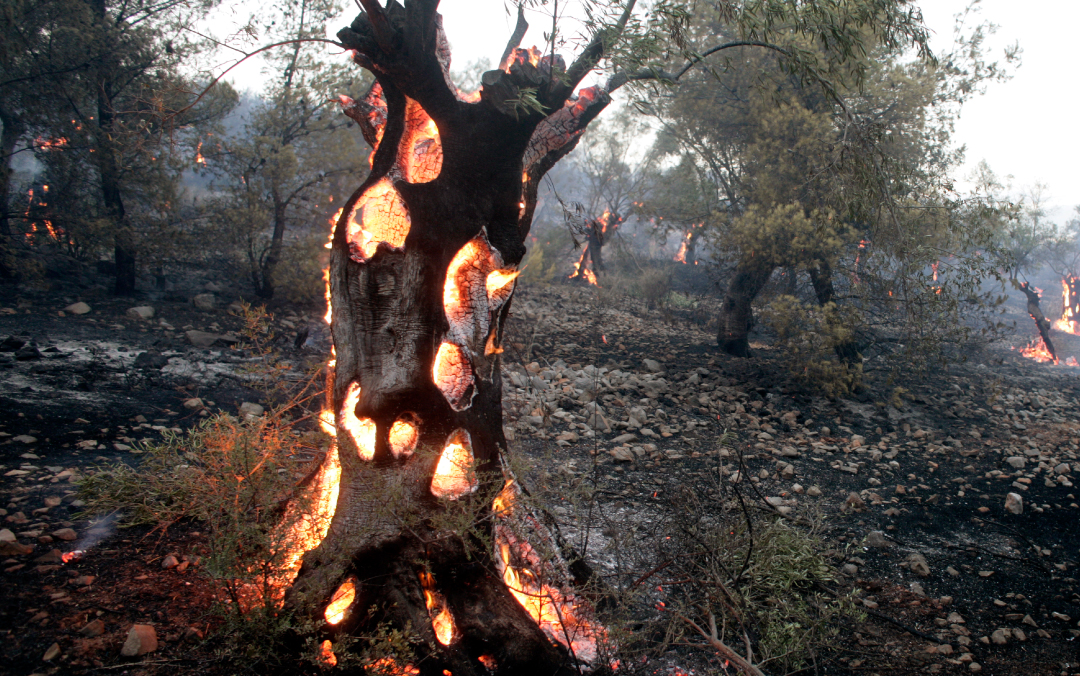
Tipping points are often analysed as the outcome of gradual warming pushing a system toward a critical threshold. But could extreme events such as heatwaves, droughts, atmospheric rivers and sea-ice surges alter the timing or pathway of these transitions?
In a recent ClimTip webinar, Anastasia Romanou (Columbia University and NASA Goddard Institute for Space Studies), Lead Author of the IPCC Working Group I chapter on tipping points, examined how extreme events interact with long-term climate forcing.
Her talk focused on a central scientific question:
Are tipping systems shaped only by slow trends or also by the variability and extremes superimposed on them?
Forced trends and stochastic variability
Global warming acts as a non-stationary forcing on the Earth system, producing long-term trends. At the same time, internal variability, arising from interactions among large-scale modes such as El Niño–Southern Oscillation (ENSO) or the Arctic Oscillation, generates short-term fluctuations and extremes.
Under continued warming, these extremes are projected to become longer, more frequent, and more intense.
More understanding is needed about how forced trends and stochastic variability may interact. Much of the tipping literature focuses on fold bifurcations under gradual forcing. But what happens, if discrete or compound extreme events act as triggers?
- Could variability amplify non-linear processes?
- Could extreme events shift systems earlier than equilibrium-based estimates suggest?
- And how predictable would such transitions be?
Case studies across the Earth system
Research on interactions between extreme events and several major tipping elements points out the relevance of climate extreme to several parts of the Earth system:
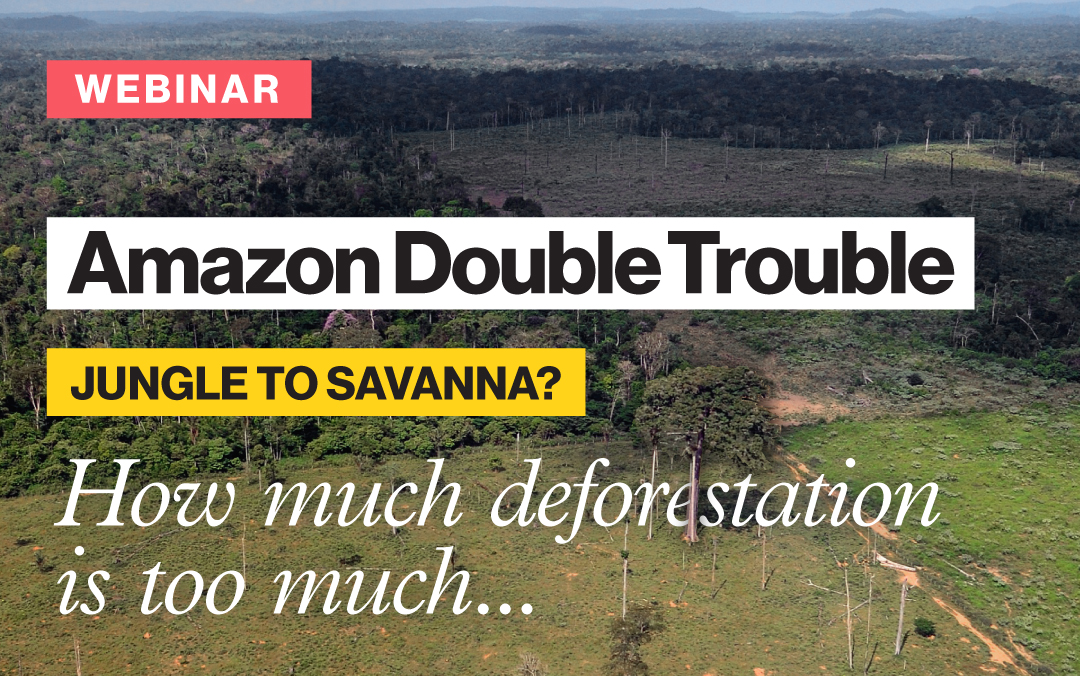
- Amazon rainforest: repeated droughts and heatwaves and their implications for ecosystem resilience and possible dieback trajectories.
- Atlantic Meridional Overturning Circulation (AMOC): large pulses of sea-ice transport and freshwater input could influence deep-water formation in the North Atlantic.
- Antarctic ice sheets: the 2022 collapse of the Conger-Glenzer Ice Shelf, linked to an intense atmospheric river and heatwave event.
These examples illustrate how short-lived but high-impact events may interact with systems already under long-term stress.
Predictability and open questions
A key issue is predictability. Rate-induced and noise-induced tipping processes may complicate the identification of clear thresholds and timescales. Paleoclimate evidence of “flickering” between states raises further questions about early warning signals.
Advances in numerical modelling and machine learning are discussed, including the emulation of rare and compound extremes under a wide range of future scenarios.
Several research questions remain open:
- Can changes in extreme-event statistics provide early warning signals?
- Can we monitor and project extremes with sufficient accuracy?
- How should tipping thresholds be reassessed if variability itself alters transition pathways?
As warming continues, extremes and tipping systems are likely to interact more frequently. Understanding that interaction and its limits remains an active and evolving area of research.
Complete Webinar Recording
The full webinar recording is available on our YouTube channel.
Visit our YouTube channel to find more webinars on science of climate tipping points.
Add to your Watchlist
Watch the previous ClimTip webinar with Julia Pongratz on the double threat to the Amazon rainforest.
Thumbnail and opener: Design by Kuat Abeshev. Photo by Luis Graterol on Unsplash