
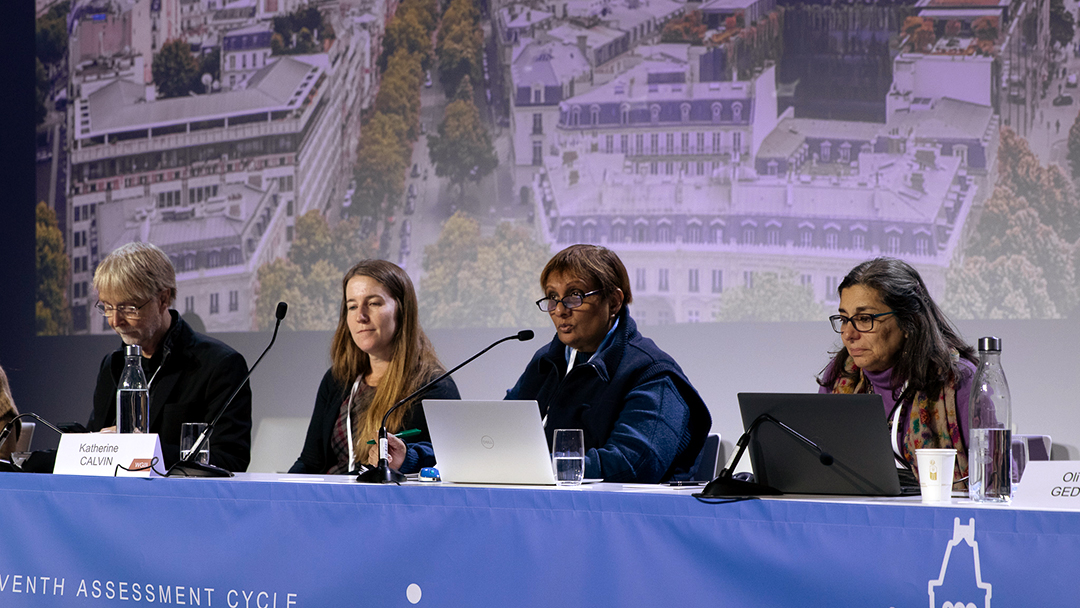
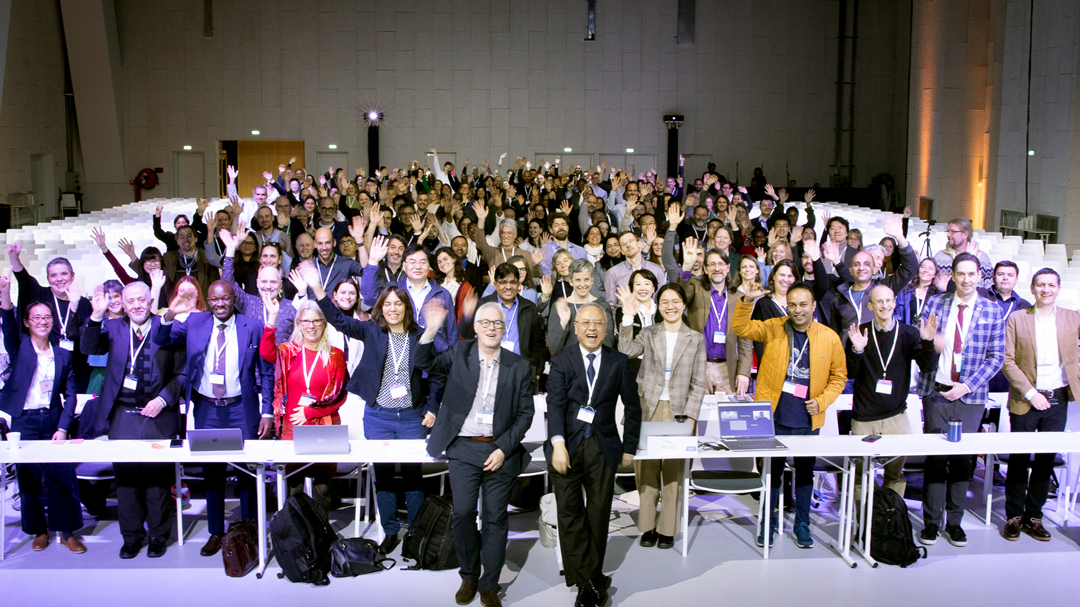
Four ClimTip researchers are among the scientists selected to lead the Intergovernmental Panel on Climate Change’s (IPCC) dedicated Working Group I’s Chapter 8 on “Abrupt changes, low-likelihood high impact events and critical thresholds, including tipping points, in the Earth system”: PI’s Ricarda Winkelmann, Valerio Lucarini, Tim Lenton, Ricarda Winkelmann and project coordinator Niklas Boers. The scope of this chapter of the Seventh Assessment Report (AR7) is a novelty in the IPCC’s 37-year history. The lead authors met in Paris from 1–5 December for the IPCC’s first joint Lead Author Meeting (LAM1), where drafting of the new report formally began.
Their work follows a three-day workshop at Sorbonne Université, co-organised by the World Climate Research Programme and the IPCC, which assessed current scientific understanding of abrupt Earth-system changes and high-impact events. Together, the two meetings marked the launch of the most ambitious attempt yet to reach a scientific consensus on the state of knowledge about ‘tipping points’, which includes clarifying their definition.
The IPCC meeting in Paris hosted all three Working Groups of the 7th Assessment Report, for the first time, reflecting the need for closer coordination across physical science, impacts and mitigation. Among those helping to shape this process is Working Group I Co-Chair Robert Vautard, who earlier this year spoke at the ClimTip–TipESM General Assembly in Paris. He outlined the scientific priorities for AR7, highlighting Working Group I’s Chapter 8 as an important step toward a more consistent and rigorous assessment of abrupt changes and critical thresholds in the climate system.
The importance of this topic has only grown. The term “tipping point” now circulates widely in the public debate while it is not always clear the term is used in the right way. Media headlines alternate between warnings that major tipping points like the Atlantic Meridional Overturning Circulation (AMOC) could collapse this century and more cautious interpretations of the available evidence. Similar divergences appear in coverage of ice sheets, monsoons and ecosystems. This reflects not only the complexity of the underlying science and the uncertainties involved, but also a communication challenge. A recent example is the Baker et al. study, which sparked headlines suggesting that an AMOC collapse is not imminent. This does not, however, contradict the scenario that the AMOC may substantially weaken and cause severe global impacts.
The new Chapter 8 in Working Group I, is intended to situate the term within more scientific foundations. It will introduce specific definitions of tipping behaviour, evaluate evidence for the possibility of tipping of proposed tipping elements, assess potential impacts, and characterise the uncertainties involved.
Former IPCC Working Group I Co-Chair and ClimTip scientist Thomas Stocker of the University of Bern has long maintained the view that tipping points require a structured IPCC assessment. In a 2024 perspective article, he and his colleagues argued that a consensus-based evaluation of potential tipping behavior in the Earth system is urgently needed and cannot be replaced by other reports that have been published. In an interview with the Bulletin of the Atomic Scientists, Stocker noted that tipping points are “notoriously difficult to investigate and even more difficult to predict,” which is why, he argues, uncertainty must be handled with particular care. Many researchers share this view, seeing such an approach as essential for bringing coherence to a rapidly evolving area of climate science.
Over the next several years, Chapter 8 will undergo multiple rounds of expert and government review before the AR7 reports are finalized. But the Paris meetings have already marked a turning point. Scientists now have a dedicated place within the IPCC to bring clarity and rigour to a concept that has grown central to public debate, yet remains widely misunderstood.
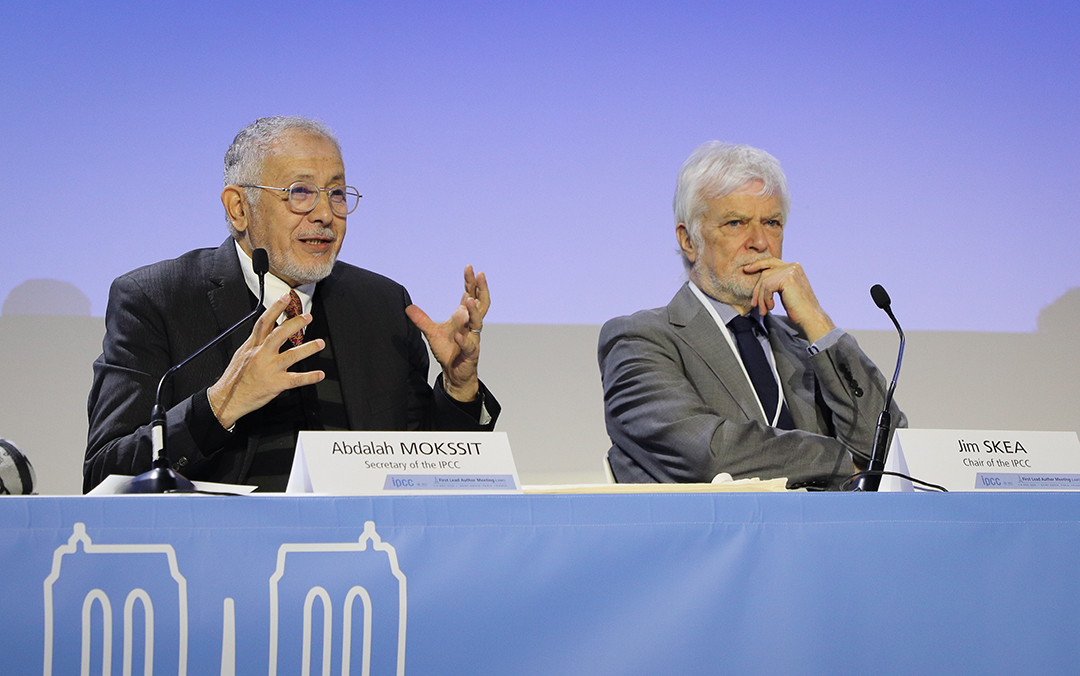
Cover image: IPCC Secretary Abdalah Mokssit and IPCC Chair Jim Skea at the opening ceremony. Source: IPCC Secretariat 2025 | Photo by Melissa Walsh
All images are courtesy of the IPCC available on Flickr.