
Large-scale tipping transitions in the Earth’s climate system could have severe consequences for climate, ecosystems and societies. Yet significant uncertainties remain about if, how and especially when these transitions might occur.
What if climate change does not unfold as expected?
Climate policies and adaptation planning often assume gradual and predictable change. But tipping points in the Earth system could lead to abrupt, self-sustaining and practically irreversible changes, with consequences for societies and ecosystems around the world.
What does that mean for the decisions we make today?
The 31st UN Climate Change Conference (COP31) takes place 9–20 November 2026 in Antalya, Türkiye, at a critical moment for international climate cooperation. UNEP's latest Emissions Gap Report finds that global warming is set to exceed 1.5°C, while full implementation of current national climate commitments would still put the world on a pathway towards approximately 2.6°C of warming this century.
Against this backdrop, governments face pressure to accelerate emissions reductions and turn climate commitments into action. Negotiations will address climate finance, adaptation and a just transition, alongside the launch of the second Global Stocktake under the Paris Agreement. Meanwhile, developing countries face a widening adaptation finance gap: UNEP estimates their annual adaptation needs at US$310–365 billion by 2035, compared with just US$26 billion in international public adaptation finance in 2023. These pressures underscore a central challenge for climate policy: not only how to limit future warming, but how to prepare for potentially severe impacts amid persistent uncertainty.
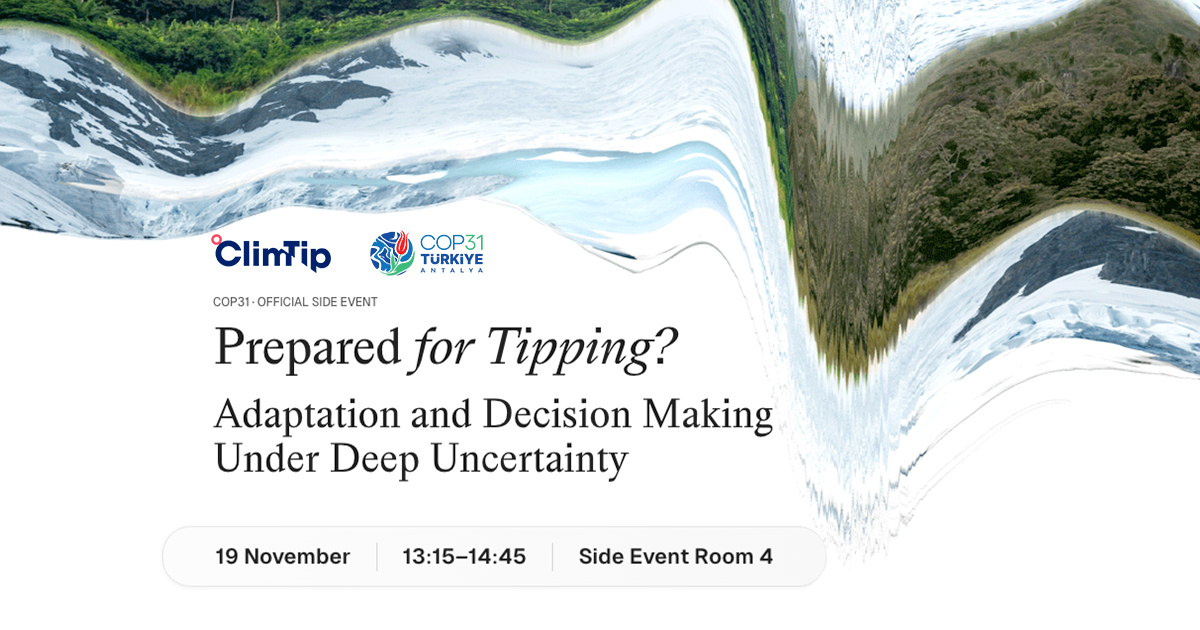
On 19 November 2026, ClimTip will host an official COP31 side event, Prepared for Tipping? Adaptation and Decision Making Under Deep Uncertainty, bringing together researchers, policymakers, climate finance institutions and practitioners to examine this question.
The discussion will feature Niklas Boers (Technical University of Munich), Elizabeth Sellwood (UNEP) and Andrew Harper (UNHCR), alongside panelists Rosalind Cornforth (The Pearl, University of Reading), Mikko Ollikainen (Adaptation Fund), Abdou Ali (CILSS/AGRHYMET) and Florence Kuali Iautu (Vanuatu National Advisory Board on Climate Change and Disaster Risk Reduction).
The aim is to move the conversation beyond identifying climate tipping risks towards understanding what they mean for real-world decisions.
How can scientific evidence inform adaptation planning when the timing and consequences of tipping transitions remain uncertain? How should policymakers and climate finance institutions approach risks that cannot be reliably quantified? And what can we learn from communities already confronting profound environmental change?
The event builds on ClimTip's newly published policy brief, Climate Tipping Points: Scientific Evidence, Risks & Policy Implications, which synthesizes current scientific understanding of major tipping elements and their policy relevance.

The side event is organized with support from the Technical University of Munich, Ludwig Maximilian University of Munich, the Potsdam Institute for Climate Impact Research and the University of Reading.
Event details
19 November 2026 | 13:15–14:45
Side Event Room 4 (AŞIK VEYSEL)
Blue Zone, Antalya Expo Center, Antalya, Türkiye
See the event programme and digital invitation. The full schedule of COP31 Side Event and Exhibits can be found here.
Image credits
Article cover image: High-Level Roundtable on Just Transition session, COP30. Photo: © UN Climate Change – Diego Herculano.
Article hero image: Youth-led Climate Forum Closure - Headline Event, COP30. Photo: © UN Climate Change - Zô Guimarães.
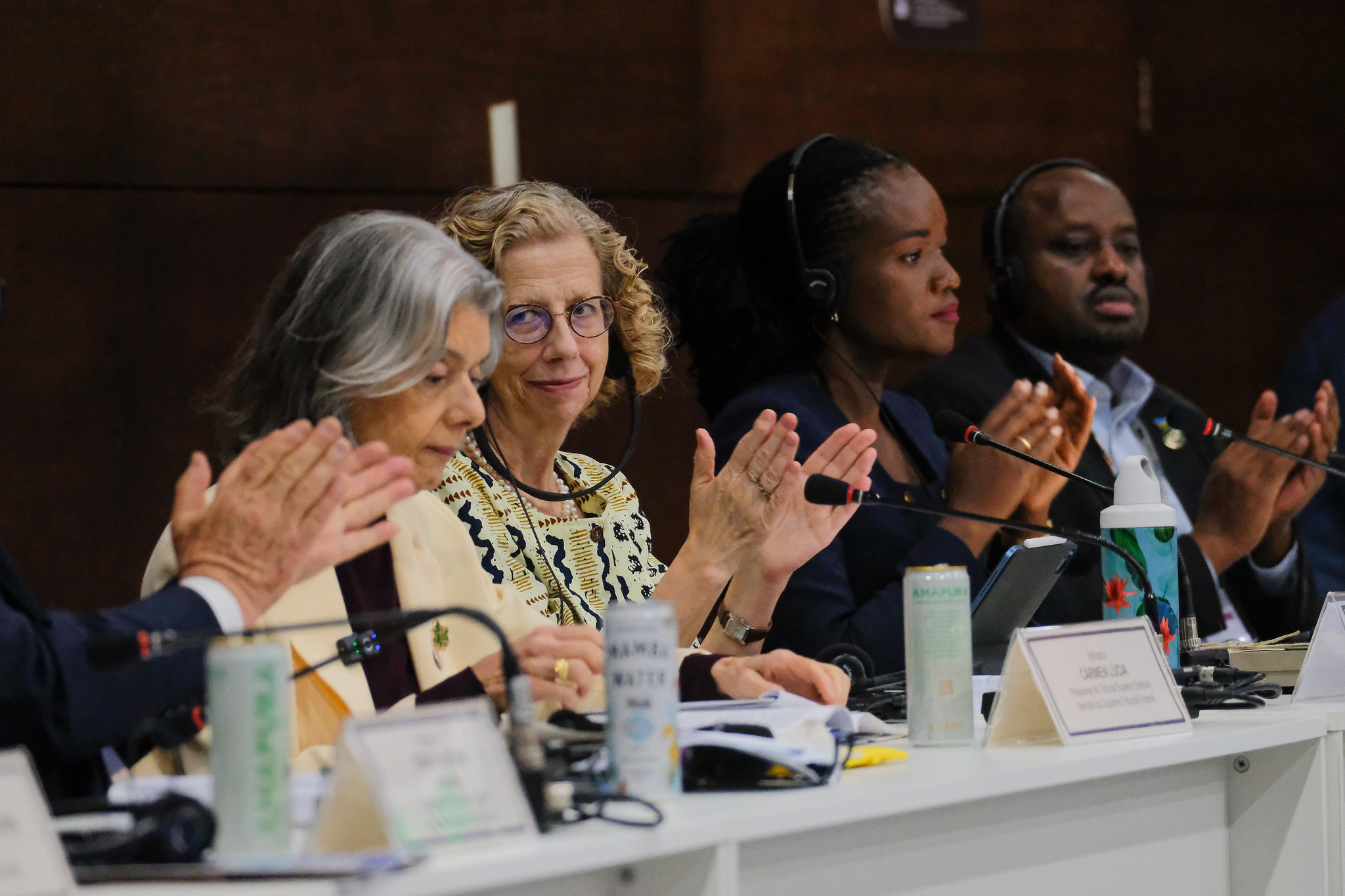
Cármen Lúcia, President of the Superior Electoral Court (TSE) and Justice of the Supreme Federal Court (STF), during the Justice Day session. Photo:© UN Climate Change - Diego Herculano.
ClimTip Policy Brief Key Visual: Illustration and cover design by Kuat Abeshev. Incorporates photos: Greenland ice sheet by Chris Stenger; Atlantic waves by Clemens Jezler; Amazon rainforest by EcoNaturalist.com; Antarctic floating ice by 66 north; all available on Unsplash. Photographs cropped, colour-adjusted and digitally distorted.