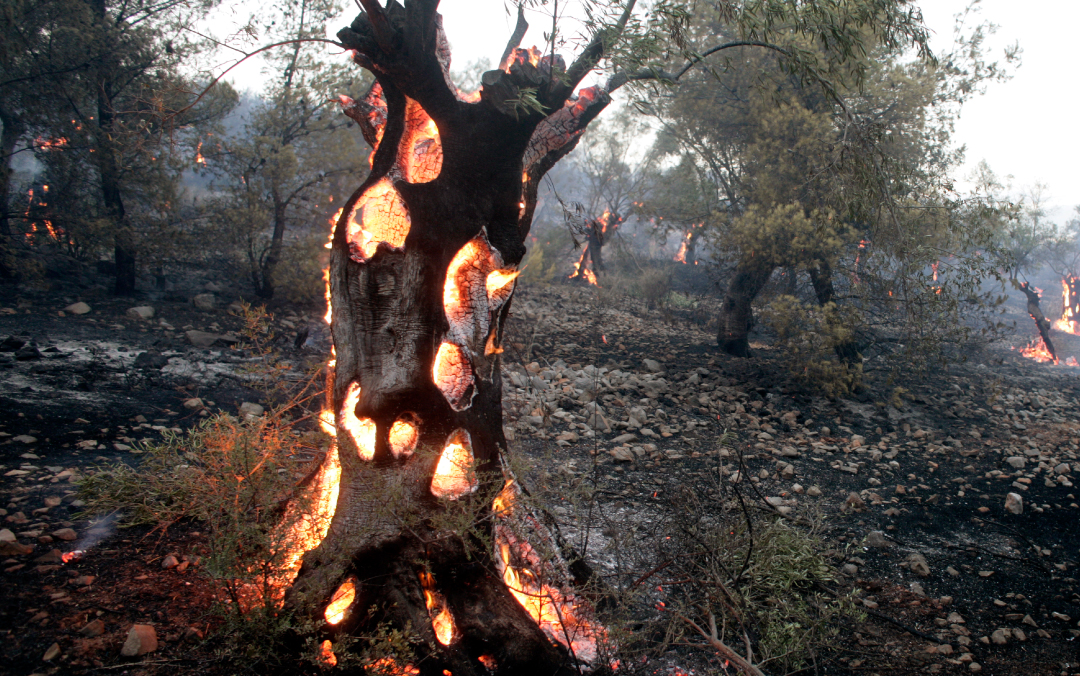
For decades, Europe’s forests have quietly absorbed around 10% of the EU’s annual greenhouse gas emissions. This critical buffer for meeting climate targets is shrinking fast, new evidence suggests. According to a new study published in Nature and led by the Joint Research Centre (JRC), the EU’s forests are now absorbing nearly a third less carbon than they did a decade ago. If this trend continues, the EU risks missing key climate milestones for 2030 and beyond.
Why carbon uptake is weakening
The decline is driven by two kinds of pressure, some of which are controllable, while others are not.
1. Climate impacts are hitting harder.
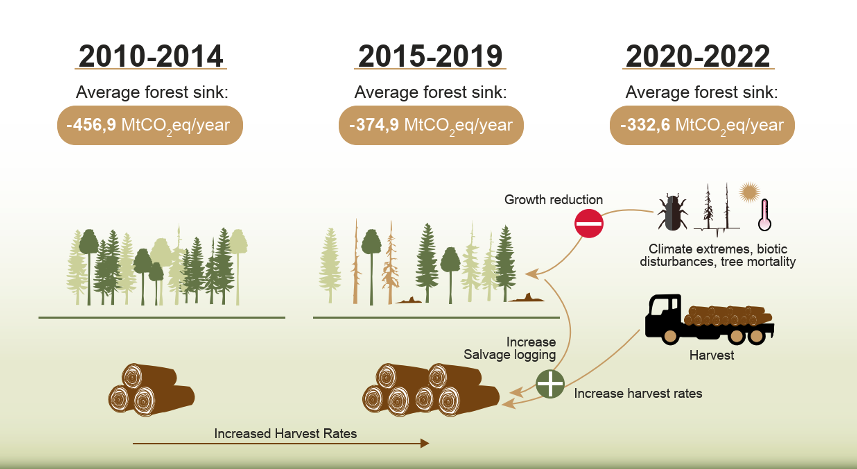
Hotter, drier summers have reduced tree growth and increased mortality. Extreme events are occurring more often, leaving longer-lasting scars with every heatwave, drought, storm, insect outbreak and wildfire. Many forests cannot recover before the next shock hits.
2. Harvesting has increased.
Higher wood demand, including for bioenergy, has pushed up harvest rates. Disturbance-driven salvage logging adds to the pressure. As shown in the JRC graphic below, salvage logging and increased harvests now reinforce each other, further weakening the sink.
Together, these forces mean that Europe's forests are storing less carbon than before, and in some regions have begun losing carbon altogether.
How to course correct
The authors outline a research and policy roadmap to secure the forest carbon sink, including:
- Better, faster monitoring of forest health, biomass, disturbances, and tree mortality using high-resolution satellite data and integrated national forest inventories.
- Improved modelling to anticipate impacts of extreme events, understand soil carbon responses, and evaluate long-term trade-offs of different forest management pathways.
- Sustainable forest management that increases forest resilience, biodiversity, and age diversity, rather than relying solely on carbon-focused goals.
- Clearer understanding of harvest impacts, including the balance between short-term wood demand and long-term carbon storage.
- Attention to water and energy cycles, recognising that afforestation and forest management can have unintended biophysical consequences.
The overarching message:
Europe cannot rely on forests as a stable climate solution unless monitoring, modelling, and management improve dramatically and quickly.
Way forward
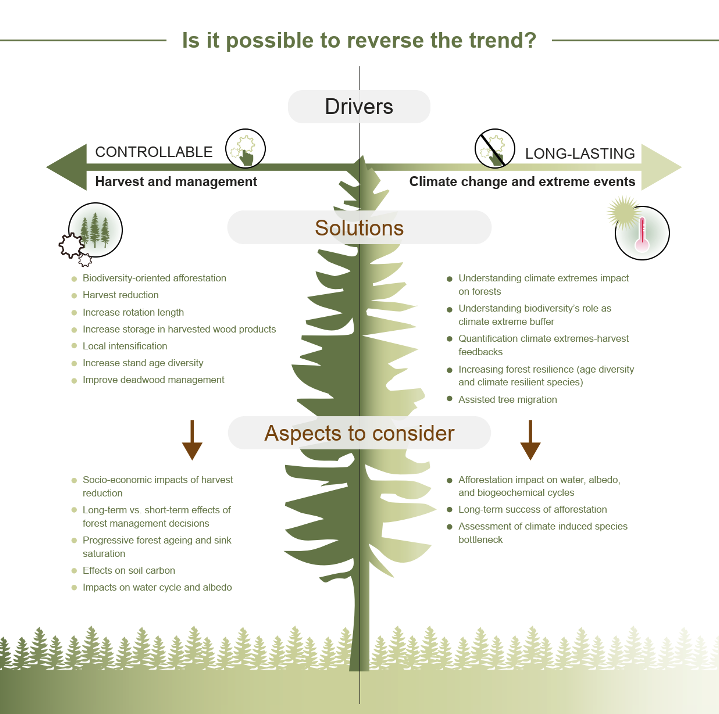
The study emphasises that part of the decline stems from long-lasting drivers, such as climate change, that require mitigation at global scale. But much of the sink’s deterioration comes from factors we can influence: how forests are managed, what is harvested, and how disturbances are monitored and addressed.
The research provides one of the clearest, most actionable assessments to date of what must change to safeguard the EU forest carbon sink, not just a critical asset for Europe’s climate strategy to succeed, but also cornerstone of its biodiversity and cultural landscape.
–
Read the full article in Nature:
Migliavacca, M., Grassi, G., Bastos, A. et al. Securing the forest carbon sink for the European Union’s climate ambition. Nature 643, 1203–1213 (2025). https://doi.org/10.1038/s41586-025-08967-3
Based on a press release by the Joint Research Centre.
Related Links
- EU Climate Law
- LULUCF Regulation
- Nature Restoration Regulation
- Carbon Removals and Carbon Farming
- EU Biodiversity Strategy for 2030
- New EU Forest strategy for 2030
Image credit: Photo by Ingemar Johnsson on Unsplash.